
Cats don’t speak our language, but they’re constantly communicating through subtle body signals. By learning to read their ears, tails, and overall posture, you can prevent stress and misunderstandings—and create a more comfortable environment for your feline friend.
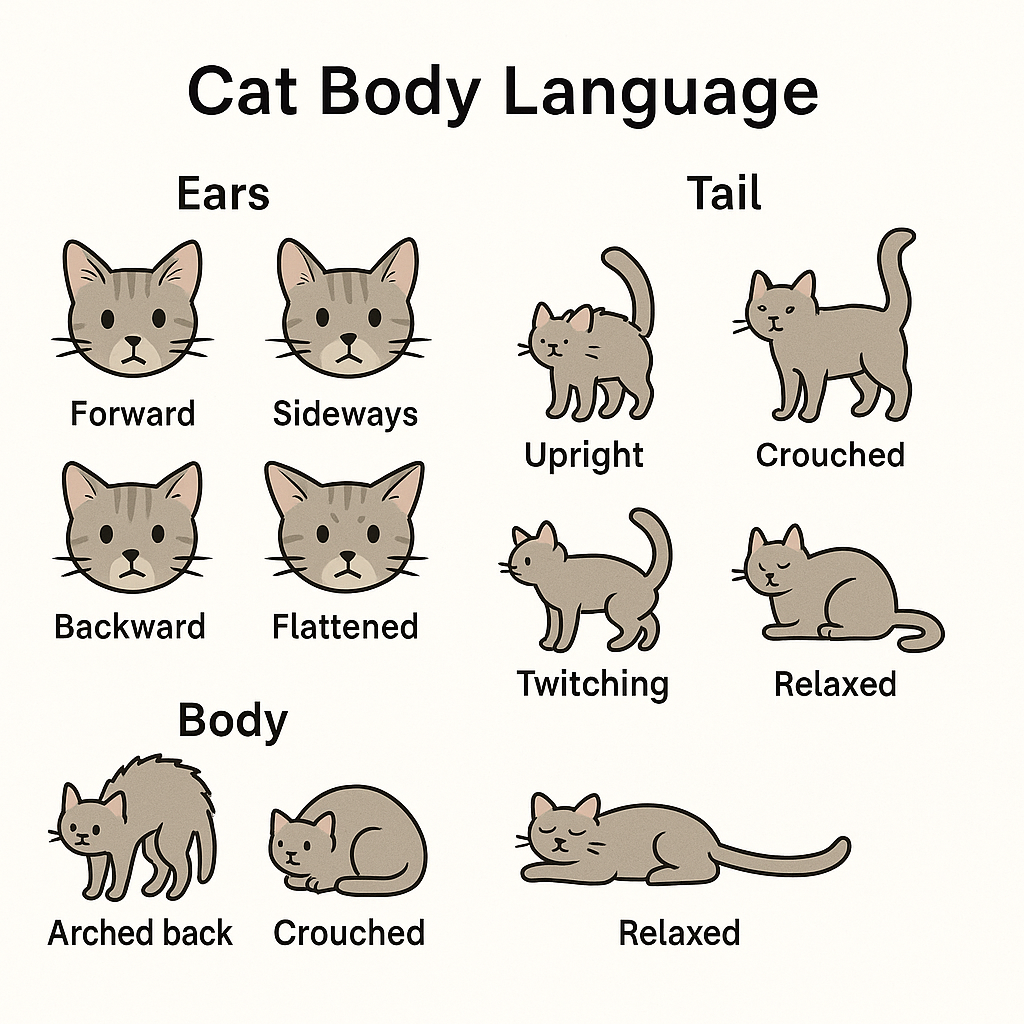
1. Ear Positions: Small “Radar Dishes” of Emotion
| Ear Position | What It Means | Your Response |
| Forward and relaxed | Calm, interested in surroundings | You may gently pet or speak softly |
| Swiveled out to the sides (“airplane ears”) | Alert, evaluating a sound or movement | Lower noise levels; avoid sudden movements |
| Flat against the head | Fear or intense irritation | Give your cat space and back off |
| One ear turned backward | Listening to something behind them | Check for disturbances; proceed with caution |
Tip: Before you reach out to stroke your cat, make sure the ears are forward (“green light”) rather than pinned back (“red flag”).
2. Tail Signals: Your Cat’s Mood Meter
- Straight up with a slight hook at the tip
A friendly greeting—your cat is happy and open to interaction. - Slow, gentle swaying from side to side
Curious or lightly excited. It’s often a good moment to offer playtime or a treat, but watch for a change in mood. - Quick, sharp “fan flick”
Indicates irritation or hunting tension. Best to let your cat be until the tail calms down. - Puffed up and bristling (“bottle-brush” tail)
Your cat is frightened or defensive—step away immediately to avoid stress or confrontation.
Observation Exercise: Notice what’s changed in the environment when the tail signal shifts. A door creaking, a sudden light, or even your own movement could trigger these responses.
3. Body Posture: The Full Picture
A cat’s posture combines with ear and tail signals to give you the clearest picture of its emotional state.
Relaxed and Trusting
- Loosened body with paws splayed
Signals comfort and security. Go ahead and offer gentle pets. - Curled into a “loaf” or ball
Indicates warmth and rest mode. They’re comfortable but not necessarily seeking interaction.
Alert or Anxious
- Crouched low to the ground
Prepared to bolt or pounce—avoid sudden movements and give space. - Arched back with fur standing on end
A classic defensive stance showing fear or aggression. Do not approach until they relax.
Friendly Signals
- Slow blink
Often called a “cat kiss,” this gesture shows trust. You can try slow-blinking back to reinforce a bond. - Head tilt or paw “tapping”
Suggests curiosity and openness. Engage in gentle play or talking.
4. How to Respond Appropriately
- Respect “red flags.” If ears are flattened or the tail is lashing, step away and give your cat time to calm down.
- Speak softly. A calm, quiet voice can soothe even the most skittish cat.
- Use treats strategically. A small snack can help shift negative associations and build trust.
- Watch first, then pet. Make sure all signals align (ears forward, tail relaxed) before initiating contact.
Conclusion
Reading your cat’s body language isn’t guesswork—it’s a skill you can develop through careful observation and respect. By tuning into ear positions, tail movements, and overall posture, you’ll foster a stronger bond, reduce stress, and ensure your cat feels safe and understood.